The Denture Center
Adding Teeth to Existing Dentures While-U-Wait
Repairing Broken Dentures & Expanding Partial Dentures In NYC
First Published: 13 October 2023
Last Updated: 17 September 2026
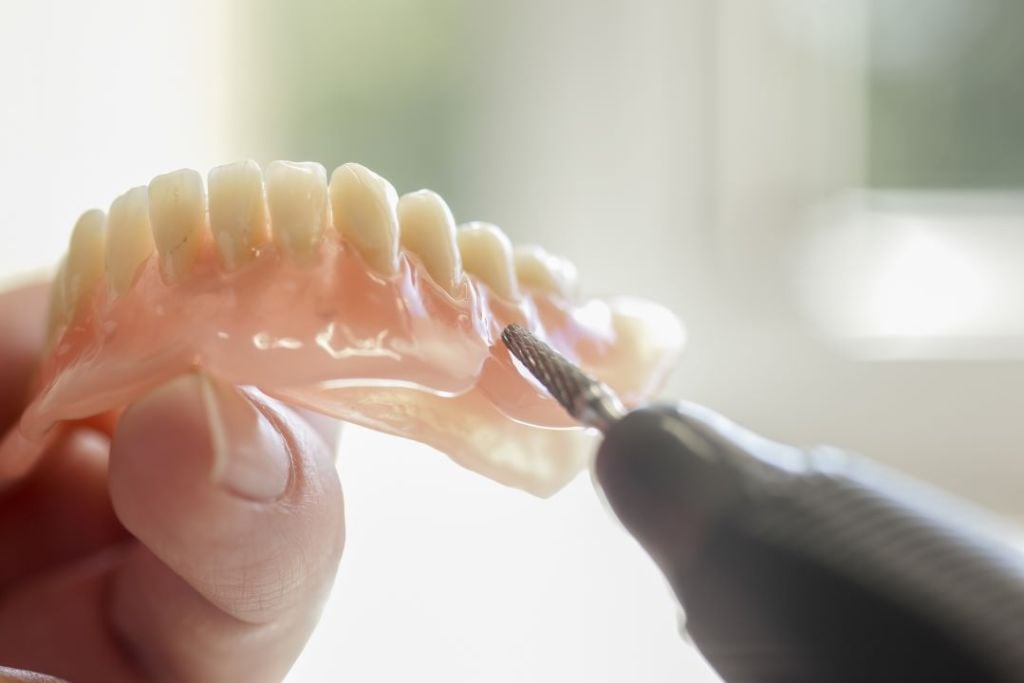
There are two different reasons for adding teeth to existing dentures. If you lose an artificial tooth from your existing dentures, we can often place a new tooth in the existing denture. Some patients with partial dentures may need a tooth added when a remaining natural tooth is lost. Whether a tooth can be added to your current denture depends on several factors.
Natural Tooth Loss
If you are currently wearing dentures but have lost a natural tooth, there are some instances when we can add a replacement to your existing denture. However, it may be more cost-effective to have a new set of teeth made. After looking at your current dentures, we can determine which option is best. We consider the denture materials, the position of the replacement tooth, and the shape and location of any remaining natural teeth.
Dentures made from cast metal or acrylic can accommodate a new tooth. The process is more difficult with a metal denture. Acrylic dentures can easily accommodate a new tooth by adding additional acrylic to support the new tooth.
Adding a new tooth to an existing denture is only possible if the missing tooth is adjacent to the location of the current partial denture. If there is a gap between the denture and the missing tooth, it is best to have a new denture made.
Our doctors and dental technicians also consider the condition of any remaining teeth. Although you may only need to replace one tooth now, you may need to replace additional teeth shortly. If you will need other teeth restored, a new denture is the best option.
Broken or Lost Denture Tooth
Occasionally, a patient breaks off or loses a replacement tooth that was part of their current denture. Because the space for the tooth is already there and the denture was designed for it, we can replace the missing restoration with a new one placed in your current denture. Our dental lab can repair a broken denture or replace the missing tooth While-U-Wait. You do not have to wait or go without.
When is Denture Replacement the Best Option?

If your denture is at least four years old, we may suggest replacing the denture rather than adding a new tooth. Over time, the anatomy of your mouth changes, affecting the fit of your dentures. We recommend replacing your dentures every four to six years to ensure proper fit, so replacement may be the best option if your dentures are worn out or do not fit well.
Can I Add More Teeth To My Denture?
If you want to know whether your dentures can accommodate the addition of another tooth, our dentists can help. We offer free consultations at our NYC Denture Center.
Can I Replace All My Teeth With Dental Implants in 2025?

Yes, it is possible to replace all your teeth with dental implants, but there are several factors to consider before making this decision. Dental implants are a common and effective way to replace missing teeth, but the feasibility of replacing all your teeth with implants depends on a variety of factors, including your oral health, bone density, budget, and overall health. Here are some important points to consider:
Oral Health
Your oral health is a crucial factor in determining whether you are a suitable candidate for dental implants. Your gums and jawbone must be healthy enough to support the implants. If you have issues such as gum disease or significant bone loss, you might need additional treatments before implant placement.
Bone Density
Dental implants rely on a strong and healthy jawbone to provide stability and support. If your bone density is insufficient, bone grafting or other procedures may be required to build up the bone before implant placement.
Budget
Dental implants can be expensive, especially if you are considering replacing all your teeth. The cost can vary depending on the number of implants needed, any additional treatments required, and the location of the dental practice. We can review costs with you and suggest options that fit within your budget.
Overall Health

Your general health plays a role in your candidacy for dental implants. Certain medical conditions and medications can affect the success of the implant procedure. We evaluate your overall health before recommending dental implants.
Treatment Timeline
The process of replacing all your teeth with dental implants is not immediate. It typically involves multiple stages, including implant placement, healing, and attachment of the crowns. If you choose individual implants for every tooth, the implant placement and healing time will be longer. While you can go this route, there are more practical solutions.
Options for Replacing All Your Teeth with Dental Implants
All-On-X Dental Implants
All-On-X implants support a full arch of replacement teeth on between four and eight implants. The All-On-X procedure can be used to replace all teeth in the upper or lower jaw. Some patients can get their replacement teeth on the same day as the implant placement. We can help determine whether teeth-in-a-day are appropriate.
Implant-Retained Dentures
Implant dentures are similar to traditional dentures but are secured to between two and six implants that permanently fix the prosthetic on your jawbone. This supports your full bite forces and eliminates slipping and shifting of the denture.
Upper Jaw
An implant-supported upper arch is more comfortable than a removable denture because it securely holds the prosthesis in place while you speak and chew. The upper jawbone is softer and more sensitive to hot and cold than the lower jawbone. An implant-supported arch does not impede your sensitivity to food and beverage temperature.
Lower Jaw
Many patients find removable dentures on their lower jaw to cause discomfort because there is no palate on the lower jaw and, therefore, no suction to hold the denture in place. Instead, an implant-supported lower denture has a more natural feeling, aesthetic, and function. Best of all, the implants support your bite force so that you can return to a restriction-free diet.
Bone Resorption & Grafting
For a dental implant placement to be successful, there must be sufficient bone mass in the spot where the implant is going. Healthy bones continuously go through resorption and ossification, removing old bone and adding new bone (respectively). When you lose a tooth, your jawbone begins resorption, but ossification stops. If a tooth stays missing, the bone resorption can decrease your jawbone’s mass by 25% in the first year.
When there isn’t sufficient bone mass or support from the jawbone to place an implant, bone grafting or APRF (Advanced Platelet Rich Fibrin) is essential. This provides new support for the implant where resorption has taken place by increasing the bone mass with bone from another source. In a single-tooth implant procedure, jawbone grafting is common, but the same is not true for full-mouth implant tooth replacements.
Snap-On Dentures
Snap-on dentures are similar to implant-retained dentures but are removable for cleaning and sleeping. It is easy to snap it in and out of the mouth but fits securely. The implants also stimulate the jaw for healthy bone growth.
What Option is Best for You?
If you are not sure which option is best for you to replace all missing teeth, you aren’t alone. The various types of dental implants can be confusing. An appointment with one of our specialists at The Denture Center is the first step in determining what kind of implants are best suited to your needs, preferences, and overall health.
Contact The Denture Center to arrange for a free consultation to learn more about how you can replace all your teeth with dental implants.

$199 New Patient Special (A $591 Value)
We want to help you take the best care of your dental health.New Patient Package
$189 which brings you high-quality preventative dental care at an affordable fee in NYC. (A $591 Value) This offer includes:- Full Mouth Series of Digital X-Rays
- Examination of your teeth and Gums
- Oral Cancer Screening
- Cleaning (dental prophylaxis)
- Personalized Treatment Plan
Celebrate the Summer in Style With a Gorgeous Smile

Life is a bit more relaxed and a lot more fun in the summertime. It’s the perfect time to try out some of the latest fashion and makeup trends. Whether you’re attending a wedding, checking out the sites on vacation, or hanging out with friends on the back patio, a gorgeous smile, and the latest beauty trends are the perfect accessories. At The Denture Center, we can help you achieve a beautiful smile with your new, fashionable look. Which of these warm weather style trends will you rock this year?
Dramatic Sunglasses
Oversized diva sunglasses are a huge hit on the beach and in upscale settings. Men and women love metallic, mirrored aviator glasses for their style and ability to protect the eyes. Embracing the past is also popular, with retro cat’s eye sunglasses and fabulous, jeweled versions at the top of the list. People are also wearing classic Wayfarers à la James Dean in Rebel Without a Cause.
Sunglasses draw attention to your face while concealing your eyes, so others will naturally look to your smile to gauge your mood. Premium dental implants are the only permanent, natural-looking solution for missing teeth and veneers are a miraculous upgrade for less-the-ideal teeth, giving you a gorgeous smile to compliment your oh-so-cool shades.
Glossy Lips and Glitzy Eyes
Summertime makeup is going full-on glam this summer, with glossy lips and eye makeup front and center. The shimmer and shine of glossy lipsticks and glitzy eyes naturally draw attention to your teeth. Don’t let damaged, decayed teeth dull the shine of your glossy makeup. When your teeth are framed by a bright, glossy hot pink or vibrant red lipstick, discolored or missing teeth are immediately noticeable. Visit The Denture Center for traditional dentures or implant-supported dentures worthy of framing with bold makeup choices.
Colorful Hair
If you’ve been longing to try out an unusual hair color, summer is the time to do it. Shades of lavender, pink, or blue are playful and fun, especially with casual, warm-weather clothing. Or go all out with custom ombre hair that gradually fades from one shade to another. If you’re adventurous enough for bold locks, be sure your smile has the wattage to match. Dental implants ensure your smile is just as youthful and vibrant as your hair color.
Summer Hats
Brimmed hats are easily the most practical summer fashion trend for 2023. Even fashion gurus acknowledge what sun damage can do to your skin. In response, the fashion-conscious are turning to wide-brimmed, stylish hats that shield the face while prominently drawing attention to your smile.
Raffia and straw hats with oversized brims, fedoras with ribbon trim, and Panama hats are being embraced by men and women. That deep brim may shield your skin and eyes, but your smile can still shine. At The Denture Center our premium dental implants give you beautiful, functional teeth and a dazzling smile, so you aren’t hiding your light under the brim of your hat.
Ready to rock the latest summer styles?
The Denture Center can restore your teeth and give you a comfortable and beautiful smile that’s the foundation for a truly stylish summer. Call our office to schedule a consultation.
Proper Denture Care and Your Health
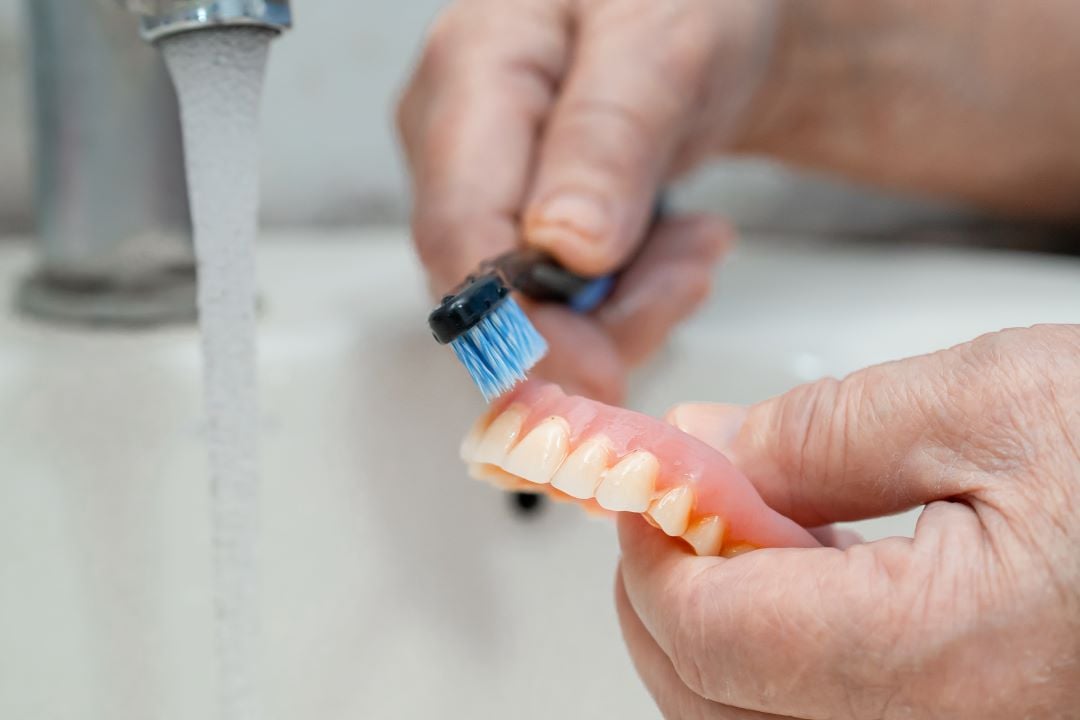
Proper denture care is crucial to maintaining good fit and function and ensuring your oral and overall health. There are many reasons to invest time in taking good care of your dentures, including:
- Preventing infections or bad breath due to bacterial growth
- Prolonging the life of your dentures
- Preventing irritation and sore spots on the gums
- Maintaining proper denture fit
- Improving appearance
Denture Care and Hygiene
Taking care of your dentures properly depends on the type of denture and what products should be used to care for them.
Removable Dentures
These traditional dentures need cleaning at least once daily to remove bacteria, plaque, and food particles. Use a soft-bristled brush and a denture cleaner, brushing all surfaces and rinsing with cool water. Try to rinse your dentures after every meal to prevent debris from becoming stuck between the teeth.
When you remove your dentures for cleaning, remember to clean your gums and tongue. Use either a gauze pad or your toothbrush to gently clean your tongue, cheeks, and the roof of the mouth where bacteria can linger.
At night, make sure you soak your dentures in a denture cleaning solution or clear, cool water. This keeps them moist and prevents warping or cracking. Never use hot water, as this can damage them.
Visit our office regularly to have your dentures checked for any damage. Any time your dentures become loose or uncomfortable, have them professionally relined or repaired to avoid damage to the oral tissues and ensure a proper fit.
Removable Implant Dentures
Removable implant dentures combine the stability of dental implants and the convenience of removable dentures. Proper care involves removing the dentures at least once daily and cleaning the attachments or abutments that hold the denture in place. You should not sleep with removable dentures in place.
Clean the dentures after breakfast and before bed using a soft-bristled toothbrush. As with traditional dentures, you should soak your removable implant dentures in cool water or a cleaning solution when sleeping.
It is crucial to keep the abutments or attachment clips in the mouth clean to prevent infection and gum disease. Clean all sides of the abutments and the surrounding gums with a soft brush or moistened gauze pad. Floss carefully around the abutments every day.
Permanent Implant Dentures
Caring for permanent implant dentures is a bit different. You care for these dentures, which are permanently attached, much like you care for your natural teeth. Brush them twice daily with a soft-bristle toothbrush and floss in and around the replacement teeth.
For flossing, be sure to use a special dental floss designed for use on implant dentures. The floss, sometimes called bridge floss, is stiffer than traditional floss so that you can easily slide it beneath the denture to clear away debris and bacteria between the gums and the denture.
Helpful Tips
- Talk to your dentist about the best cleanser or toothpaste to care for your dentures.
- Ask us about the best type of dental floss for your style of dentures.
- Consider investing in a water flosser, which can make caring for your dentures and gums easier and more effective.
- Always clean your dentures after the last food you eat at the end of the day to avoid bacteria proliferation while you sleep.
How the Denture Center Can Help You Care for Your Dentures
Even with the best of care, dentures eventually wear down, slowly collapsing the bite, causing you to look older. Also, they may become damaged due to mishandling, dropping, or an accident. Over time, they may loosen or warp. The Denture Center offers complete maintenance and repair services to help you keep your dentures strong, attractive, and secure for as long as possible.
Denture Exams
Your gums change over time, which affects the fit of your dentures. A denture exam can indicate when your dentures need to be relined or adjusted for proper fit and function. We recommend having a denture exam/oral exam at our office at least once a year at which time we perform the oral cancer screening as well.
Denture Repairs and Relines
Dentures usually need to be relined every two years. Our in-office denture lab can reline your dentures for optimal fit to help prevent slipping or shifting. If your dentures are cracked or chipped, or if you need a denture tooth added or replaced, we can repair them While-U-Wait. Having our own laboratory allows us to offer same-day repairs and same-day relines to our patients.
Denture Replacements
If your dentures are damaged beyond repair or are worn down, our in-house laboratory means we have the ability to create a new set of custom dentures in a single day. This gives you the opportunity to see how your new teeth look in wax in your mouth during that process before the final insertion at the end of the day.
New Year, New You!

Are you ready to jump into the new year with enthusiasm? The start of the year is often when people make resolutions to improve their lives, focus on their health, or move up in their careers. Many people are self-conscious when doing something new due to their appearance. Change is central to most resolutions, but you need the confidence to step forward fearlessly to make those changes.
How Your Oral Health Affects Your Appearance
You may not realize how much the condition of your teeth can affect your facial structures and appearance. Missing teeth are visible when you smile, but others often notice something a bit “off” about your appearance, even if you cover them. When your teeth are missing, they can’t support your cheeks. The result is a sunken appearance that can make you look years older.
If you’ve replaced your missing teeth with dentures, you’ve taken the first step toward looking and feeling better about yourself. However, if your dentures are five or more years old, now is the time to replace them. Daily wear contributes to acrylic dentures wearing down so that you look older than your age. Additionally, your dentures may be wearing unevenly. Ill fitted or worn out dentures may begin to slip, causing embarrassment and inconvenience.
Appearance and Self-Confidence
Looking older than you are or being unable to smile comfortably takes a psychological toll. Your self-perception is affected, and you don’t feel as confident. It can dramatically affect everything you do – or don’t do – in the new year. Interviewing for a job is never easy, but your first impression won’t be good if you are afraid to smile or look old and tired. Even your social life is impacted if your teeth or dentures make you uncomfortable or self-conscious. You may cover your mouth with your hand or simply stop smiling. Even eating is more difficult with unhealthy or missing teeth, making it challenging to maintain a healthy diet.
You Don’t Have to Look Older Than You Really Are
What can you do to make this year an amazing one? Revitalize your outlook and your confidence. It may simply start by boosting your self-esteem and improving your health with new dentures that restore your proper bite and more youthful appearance! With new, properly fitted dentures, you can enjoy all the foods you love, eat healthy, crunchy fruits and vegetables, and stop worrying about your dentures slipping, shifting, or clicking. You will be more apt to smile and laugh freely which should help energize you for a bright new year.
Properly fitted dentures can shave years off your life. Straight, white replacement teeth that support your cheeks and are properly aligned give you a more youthful appearance and transform your smile. You’ll look and feel better about yourself, and that wonderful feeling of youth and confidence often spill over into other areas of your life. Get ready to stride into that job interview, ask your crush on a date this Valentine’s Day, or smile with joy in family photos.
Is It Time to Replace Your Dentures?
We recommend replacing your dentures every 4-6 years to ensure a good fit and comfort. Most dental insurances cover replacement every five years, and you can get your current dentures repaired or relined more frequently. If you want to start the New Year right, investing in high-quality, custom dentures can make you feel like a brand new you!
Did George Washington Have Wooden Dentures?
The Myth Of Presidential Wooden Teeth
First Published: 1 February 2023
Last Updated: 17 September 2026
It’s February, the month we celebrate President’s Day, when we honor George Washington, the first president of the United States. Most of us learned about Washington in grade school, and many learned at some point about his “wooden teeth.” It’s a legend that has taken on the aura of truth for over two centuries, but it isn’t true. What IS true is that he had dentures, or false teeth, from a young age.
George Washington’s Teeth
President Washington had oral health problems from a young age. By the time he took his first oath of office in 1789, he had only one natural tooth left. Losing some teeth wasn’t all that uncommon for adults a few centuries ago, but Washington had lost more than the typical individual of his age. Most likely, he didn’t practice good oral hygiene, as even after he began wearing dentures, he didn’t take good care of them. At least one dentist who crafted and repaired dentures for Washington wrote to him complaining that they were not well cared for and that the president needed to be more attentive.
Like most people with missing teeth in the last half of the 1700s, George Washington’s options for replacing missing teeth were limited. The dentures available were poorly designed, poorly fitted, and incredibly uncomfortable. It’s no surprise you never see a painting of George Washington smiling – he was in nearly constant pain from his dentures!
The legend of his wooden teeth probably originated during his lifetime. Some people who saw his dentures when he spoke assumed the teeth were wooden because they were streaked with stains that gave the appearance of wood grain. Sadly, the intense staining was probably because he neglected proper cleaning of the dentures. Washington was also known to do his own repairs on his dentures. When he was repairing them, including attempts at reshaping them to fit better, others assumed he was “carving” them from wood.
George Washington’s Dentures
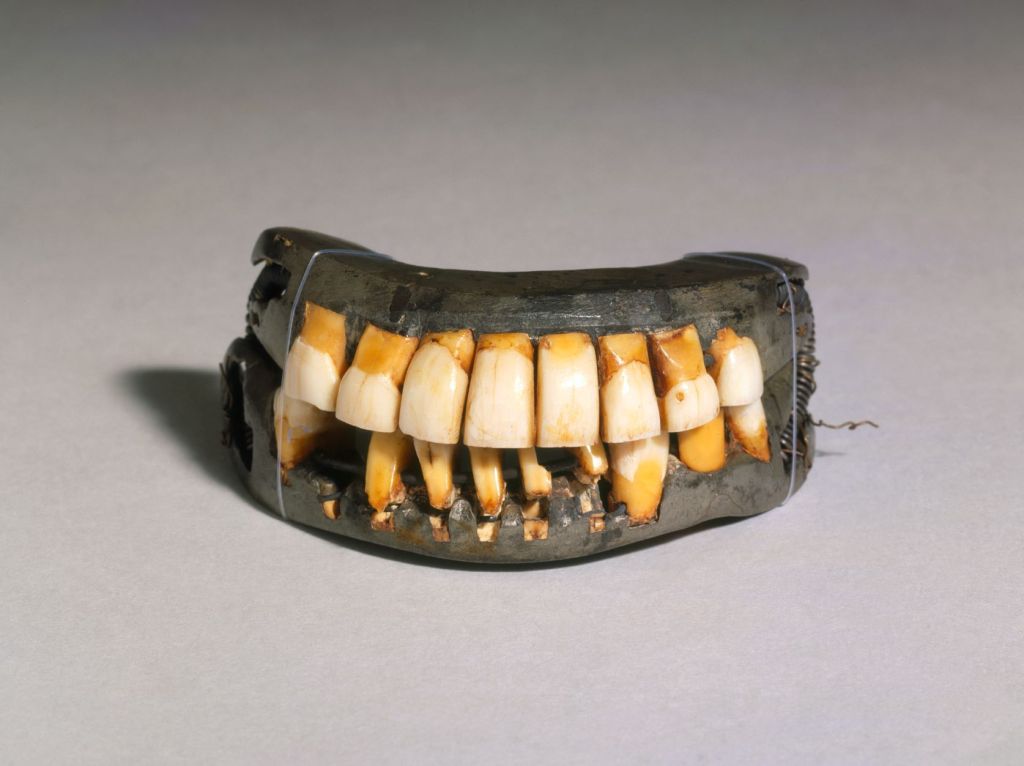
Courtesy of Mount Vernon Ladies’ Association.
Throughout Washington’s lifetime, he had multiple sets of dentures made from various materials. Most dentures at that time were hinged at the back, using springs to allow them to open and close. Pinching of the inside of the mouth and the tongue was common when wearing them. Because there was no way to custom fit dentures at the time, dentures used a rough measurement of the mouth and made dentures that would fit inside the mouth but didn’t fit properly over the jaw ridges and gums. The dentures irritated the gums and cheeks, sometimes leading to chronic sores in the mouth.
Washington’s various dentures were made from walrus, hippo, and elephant ivory; animal and human teeth; and metals such as brass, lead, gold, and silver. Wooden pegs or metal screws were sometimes used to hold the individual teeth within their frames.
How Dentures Have Changed
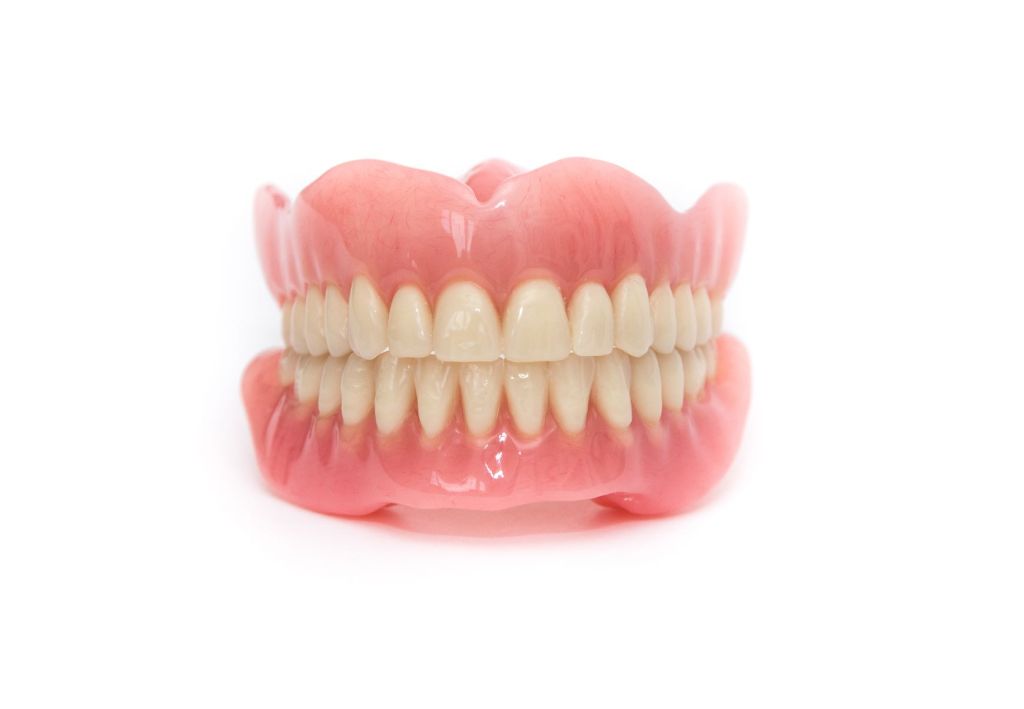
If he were alive today, George Washington would be amazed by the quality and comfort of today’s dentures. We’ve come a long way from hippopotamus ivory, animal bones, and wooden or lead frames with springs and wires. Today’s dentures are made of high-quality, biocompatible materials such as resin, acrylic, nylon, or porcelain. These materials are safe, strong, and closely resemble natural teeth.
Modern dentures are custom created to match each individual’s mouth, jaw ridge, and gums to prevent rubbing or painful pressure points. At The Denture Center, we craft every patient’s dentures with personal care and attention. We make our dentures in-office and refine them with your feedback to ensure a perfect fit so that you can leave with a smile. Our goal is a perfect, custom fit and total comfort with every pair of dentures. George Washington would be jealous.
Experience The Comfort Of Modern Dentures
Contact us today to schedule your denture consultation today!
What’s the Rush to Brush After Eating?
Most of us learned from a young age that brushing at least twice a day, especially after eating, is the best way to protect our teeth and prevent cavities. Brushing after meals removes food debris and helps prevent plaque formation. But brushing immediately after eating is not always a good idea. It turns out it depends on what you eat.
Brushing right after eating carbohydrate-rich foods like bread and pasta, or foods high in sugars like caramels and sodas, is a good idea. Brushing immediately stops acid attacks on your tooth enamel by removing bacteria and debris before carbohydrates and sugars are converted to acids that attack teeth enamel.
Acidic Foods and Brushing
It isn’t always a good idea to brush your teeth right away. If you eat or drink foods or beverages high in acid (citrus, juices, teas, sports drinks, tomatoes), waiting for at least a half-hour before brushing is advisable. Highly acidic foods attack tooth enamel. If you brush right after eating, you may damage your tooth enamel because brushing actually pushes the acid into your teeth.
Foods with high acid content can cause more damage if you brush too soon because the acid has already softened the enamel, leaving it vulnerable to the effects of bacteria. It takes about 30 minutes for your tooth enamel to harden and remineralize so that you don’t brush it away when cleaning your teeth. Instead, drink a glass of water immediately after eating acidic foods to rinse away some of the acids. Brush after 30 minutes or more to remove food debris and prevent plaque buildup.
Minimizing the Effect of Acids on Your Teeth
There are ways to protect your teeth from the effects of acid between brushings:
- Avoid eating acidic foods by themselves. Combining them with other foods helps neutralize acids.
- Always drink water after acidic foods or drinks.
- Drink acidic beverages through a straw to reduce contact with your teeth.
- Cut back on sugary foods, which convert to acids.
When and How to Brush
We recommend brushing your teeth after breakfast so that your teeth are clean and free of plaque during the day. Brushing before bed provides the same advantage – you remove debris and bacteria before sleeping, so your teeth are not attacked overnight. Between these two brushings, brush if you can after eating or drinking, keeping in mind that waiting 30 minutes after eating acidic foods is best. Don’t forget to rinse your mouth with water after every meal, particularly if brushing isn’t practical.
Proper brushing includes knowing when and how to brush your teeth to prevent damage to tooth enamel. Having your teeth cleaned professionally twice a year is one of the best ways to preserve your dental health and protect your teeth’s enamel.
What Do You Know About Tooth Decay and Oral Health?

Tooth decay is the number one cause of tooth loss. Most of us know that brushing and flossing are essential in the battle against tooth decay. Still, few of us realize our daily activities’ dramatic effect on our teeth. Read on to learn how simple everyday activities can contribute to tooth decay and negatively impact our oral health.
- If you drink three or more sodas a day, you will have 62% more tooth decay than someone who drinks less soda. Sodas with a high acid level, particularly phosphoric and citric acids, are the worst offenders, causing even more damage than those with high sugar levels. Drinking water instead of soda decreases the risk of tooth decay dramatically.
If you don’t want to give up soda entirely, club soda and root beer are two options that do less damage. The worst soft drinks for your teeth include Coke and RC Cola. Running a close second place for acidity are cherry-flavored colas, including Dr. Pepper. Clear sodas like 7-Up and Sprite come in third. Diet sodas might seem like good alternatives, but while low in sugar, they are still high in acid. - There are over 300 species of bacteria in plaque, the thin, sticky coating that builds up on our teeth daily. Using an anti-bacterial rinse cuts down on the harmful bacteria on your teeth. You can purchase over-the-counter dental rinses, or your dentist may prescribe a prescription strength rinse if needed.
- To use an anti-bacterial mouthwash, floss and brush your teeth first. Rinse with two teaspoons of your oral rinse, swishing around your mouth for one minute, then spit out. Do this twice a day if using an OTC mouth rinse. When purchasing, look for the ADA seal of approval. When using a prescription antibacterial rinse, follow the label directions carefully.
- The Centers for Disease Control (CDC) estimates that 26% of adults in the United States have untreated tooth decay. Some factors that may affect your chances of developing tooth decay include whether you smoke, your diet, and genetic predisposition. Routine dental exams and professional dental cleanings help reduce the risks posed by these factors. Identifying and treating decay before it progresses is essential, so don’t wait until you experience pain to see the dentist.
- Cavities are one of the most common dental problems in children. According to the Centers for Disease Control and Prevention (CDC), 20% of children between 5-11 years old have tooth decay. Cavities, also known as caries or tooth decay, are common among children. Left untreated, your child can experience pain and infection. Children don’t understand proper oral health and how to care for their teeth without instruction and supervision. Help your child properly floss daily and brush twice a day to minimize the chance they develop tooth decay. Twice yearly professional cleanings are a must. During their visits to the dentist, be sure and ask about dental sealants, which protect the teeth in areas that are hard to reach with a toothbrush.
- We are serious underachievers when it comes to brushing our teeth. We should brush our teeth at least 2-3 minutes twice a day, but most people brush for 70 seconds or less. Try playing your favorite song on your phone and brush the entire time your music is playing to make sure you are getting the job done properly.
A few 2-minute songs for brushing your teeth include:- The Beatles, “And Your Bird Can Sing”
- The Clash, “White Riot”
- Eddie Cochran, “Summertime Blues”
- Gorillaz, “Don’t Get Lost in Heaven”
- The Police, “Miss Gradenko”
- Elvis Presley, “All Shook Up”
- Ray Charles, “Hit The Road Jack”
- Simon & Garfunkel, “Song for the Asking”
- Louis Armstrong, “What a Wonderful World”
- Periodontal disease, or gum disease, is often connected to other health conditions. For example, if you have diabetes, you have a 95% chance of also having some form of periodontal disease. Diabetes may restrict blood flow to gums and teeth. Using fluoride toothpaste, flossing, and seeing the dentist regularly is imperative as is working with a physician to control blood sugar levels as much as possible.
- Pregnancy can lead to dental problems in some women, including gum disease and tooth decay. During pregnancy, hormones affect the gums and teeth. Brushingtwice a day with fluoride toothpaste and visiting your dentist will help keep your teeth and gums as healthy as possible during pregnancy.
- A full complement of teeth is 32 if you retained your wisdom teeth, 28 if they were removed due to overcrowding or impaction.
- Enamel is the strongest material in the body – even more robust than bone! This is a good thing because we put our teeth through a lot of wear and tear when we are eating, chewing, and grinding foods, and our teeth cannot heal themselves once they develop a cavity. Unfortunately, the enamel is thin, so we must take diligent care of our teeth.
Orthotics can help prevent grinding and bruxism that contribute to wearing of the enamel. You can also avoid acidic breakdown by avoiding soda and lemon in your water, and acidic and sugary foods. Routine exams, regular dental cleanings, and fluoride treatments also minimize damage to tooth enamel. - Tooth decay leads to tooth loss if left untreated. When you don’t have your full complement of teeth, it leads to open gaps in the mouth, shifting of the other teeth, an increased risk of infection, and deterioration of the jawbone. There are a variety of solutions for missing teeth, including crowns, bridges, temporary flippers, Nesbit, dentures, and dental implants. However, preserving your natural teeth and protecting them against tooth decay is always best.
Our teeth are powerful yet fragile creations. Without them, eating, drinking, speaking, and laughing are all hindered. When our teeth are missing, our appearance is transformed and our confidence is rattled. Caring for them is essential to our health, well-being, and self-image.
Stop Bullying Your Teeth!

Are You Making These Common Dental Care Mistakes?
Are you bullying your teeth? We often take our teeth for granted, but they are susceptible to injury and decay if not cared for properly. Unfortunately, some people assume their teeth are much stronger than they are and end up bullying them in ways that lead to problems. Find out what we consider aggressive behavior toward your pearly whites and how you can start treating them better.
Brushing Aggressively
You may think, “If brushing with a soft bristle toothbrush is good, using a medium or firm bristle toothbrush is better.” Wrong! Firmer bristled wear away your tooth enamel, damaging the layer that protects the underlying dentin. When enamel is damaged, your teeth are more likely to develop cavities. Hard bristled can also irritate your gums or cause them to recede, making them vulnerable to decay, infection, and periodontal disease.
Pushing too hard on your toothbrush is also a no-no. If you scrub aggressively, you can damage the enamel. Pressing too hard on the brush may also cause the bristles to flare out instead of coming into contact with the teeth for effective cleaning. It is more important to use proper brushing techniques, including using a circular motion on each tooth, so the ends of the bristles get into the crevices and between the teeth.
Chewing Ice
Chewing on ice can be soothing and refreshing – right up to when you bite down and chip or crack a tooth. Not so cool then, is it? Even hairline cracks cause sensitivity to hot and cold foods and are prone to decay. Chewing ice regularly also irritates the gums and can cause inflammation or recession. Just say “NO!” to chewing ice and reach for a piece of sugar-free gum instead.
Refusing to Wear a Mouth Guard for Sports
Consider a sports mouth guard as necessary as a seatbelt when you are in a vehicle. If you love your family, they wear a seatbelt to protect them in a crash. If you love your teeth, you defend them when participating in contact sports. Whether you take a hit from a hockey stick or land on your face during a skateboarding trick, the result can be devastating if you do not wear a mouthguard. Just imagine how you will look and feel if you end up with missing or broken teeth. Your teeth deserve protection. Give it to them.
Grinding Your Teeth
Grinding your teeth (the fancy term is bruxism) leads to chips, cracks, and excessive wear. It can also cause headaches and jaw pain. Many people grind their teeth as a reaction to stress. But is it fair to take out your frustrations on your teeth? After all, they serve you faithfully and never complain. They deserve to be treated gently. If you grind your teeth at night, do not ignore the problem and assume it is a harmless habit. Talk to your dentist about getting a night splint to give your teeth a respite from the nightly grind.
(Tooth)Picking
Using a toothpick to get some stuck food out of your mouth seems like a good idea when you have a stubborn popcorn kernel wedged between your teeth. However, toothpicks are not the best choice. They can irritate or scratch your gums, leading to infection. Toothpicks are also prone to splintering, leaving slivers of wood lodged between your teeth. Reach for dental floss and a toothbrush instead.
Busting The Top 4 Temporary Denture Myths
It is cringe worthy when we hear the term “temporary denture” because it implies that a denture fabricated for immediate placement after tooth loss is uncomfortable, unattractive, and of poor quality.
Myth #1 – Quality Questions
At The Denture Center, we custom craft immediate dentures using the best material and attention to detail that is synonymous with quality. Because our dental practice features an in-house lab, we have been custom fabricating immediate dentures since our inception in 1977. Herald Square Dental and The Denture Center presents each individual patient with an immediate denture that fits well and recreates their natural smile. We always use the material, craftsmanship and detail that we are so well known for, when creating your immediate and sometimes inaccurately termed, “temporary denture”.
Myth #2 – Comfort Concerns
Our custom, quality immediate dentures are not really “temporary” dentures but you may experience significant gum shrinkage over the course of a year if you have undergone multiple extractions. Then it may require either a reline or replacement. Our immediate dentures are not designed before your teeth are extracted as they are at most dental offices. Our technique will allow you to go home with fully functional dentures the same day we extract teeth. Our expert cosmetic dentists and our in-house lab are what set us apart. You can enjoy your comfortable, new dentures the same day. Your beautiful immediate denture will allow you to avoid the embarrassment of living without teeth.
Getting Used to Immediate Dentures
The first time you put any style of denture in, it may feel unusual for a few days. This is not an indication of poorly fitting dentures. Your body must adjust to the feeling of something foreign in the mouth and learn how to eat and speak properly with the denture. This can take a few days but will soon subside. Our patients can chew, talk, and laugh comfortably with our high-quality immediate dentures.
Adjusting the Fit
Keeping your denture in place for the first 24 hours after surgery (including while sleeping), unless there is excessive bleeding or soreness acts as a bandage to help control bleeding, limit swelling and helps the healing process. It is important that you contact our office if your experience discomfort or if the immediate denture requires adjusting as you heal. We expect some changes and will have you return to our office to fine-tune your immediate denture until shrinkage has stabilized. At the 12-month mark, some of our patients opt to have premium dentures with porcelain teeth or partial flexi dentures placed at that time. Others do very well with our professional reline if shrinkage was minimal.
Myth #3 – Use Limitations
You may worry that your new immediate dentures are simply a cosmetic stop-gap until your permanent dentures are ready, limiting your ability to eat the foods you love or speak with confidence. This is more about getting used to wearing dentures than any limitations on them. You can enjoy life wearing your beautiful immediate/temporary dentures without others knowing you are wearing them once you allow yourself time to adjust to them. For the first few days, a soft diet is recommended so you can get used to chewing with dentures. Soon, you will be living life comfortably with the addition of a beautiful smile.
Myth #4 – Longevity
The better your dentures fit, the longer they will last. Be sure to contact our office when your dentures feel loose. We will schedule a time to adjust them and possibly reline them to accommodate changes in your gums and surrounding soft tissues, prolonging the life of your immediate/temporary dentures. Some of our patients experience minimal shrinkage and are happy with their immediate dentures and the fit after we reline them. With proper care, they were made to be durable. That said, all denture wearers should visit annually to assess the wear and fit of the denture and have an advanced oral cancer screening. Partial denture wearers should present more often for preventative care for any existing natural teeth.
Truly Temporary Dentures
When applied to dental prosthetics, the term “temporary” can be misleading. There true temporary dentures are flippers or flipper teeth and nesbits. Both are partial dentures made of acrylic to temporarily replace one, two, or three missing teeth. They are typically considered interim devices and are a cost effective option to hold the space of one or two missing teeth while you are making your long term plans. At the Denture Center, flipper teeth or a nesbit can be made While-U-Wait.
To learn more about the many options available to replace your missing teeth, including temporary dentures, contact our office to schedule a consultation.